
Why Competitors Show Up in AI Answers
(but You Don't)
When buyers ask ChatGPT, Claude, or Perplexity for recommendations, AI systems decide who to include based on what they can retrieve, trust, and cite. Brands with weak entity signals get left out. Thin content architecture gets left out. Missing authority markers get left out. Being the better choice doesn't matter if AI can't find you, trust you, or cite you. Growth Marshal diagnoses and fixes the visibility deficit that keeps qualified companies out of AI-generated recommendations.
Definition
What is AI visibility?
AI visibility is a brand's ability to appear consistently in LLM-generated recommendations, comparisons, and "best of" lists. Visibility depends on three factors: whether AI systems can retrieve a brand's content, whether that content is structured for extraction, and whether corroborating signals establish the brand as a credible category participant. Low AI visibility results in lost pipeline, competitive displacement, and brand narrative drift.
[THE PROBLEM]
Why companies get excluded from AI recommendations
AI systems like ChatGPT, Claude, Perplexity, and Gemini build recommendations from what they can retrieve and verify. Businesses get filtered out of buyer consideration when their content lacks the structure, clarity, and corroboration these systems require.
Common Causes
Weak content architecture: pages lack the category definitions, comparisons, and proof blocks that AI systems prioritize for retrieval.
Inconsistent entity signals: brand name, category, and service definitions vary across web properties, confusing AI systems about what the company does.
Low answer density: content is optimized for keywords rather than structured to directly answer buyer questions.
Definition
AI visibility filtering occurs when large language models exclude a brand from recommendations because retrievable content is missing, unstructured, or uncorroborated. Filtering happens before the buyer ever sees a result.
Quick Diagnosis
Prospects mention competitors were “AI recommended.”
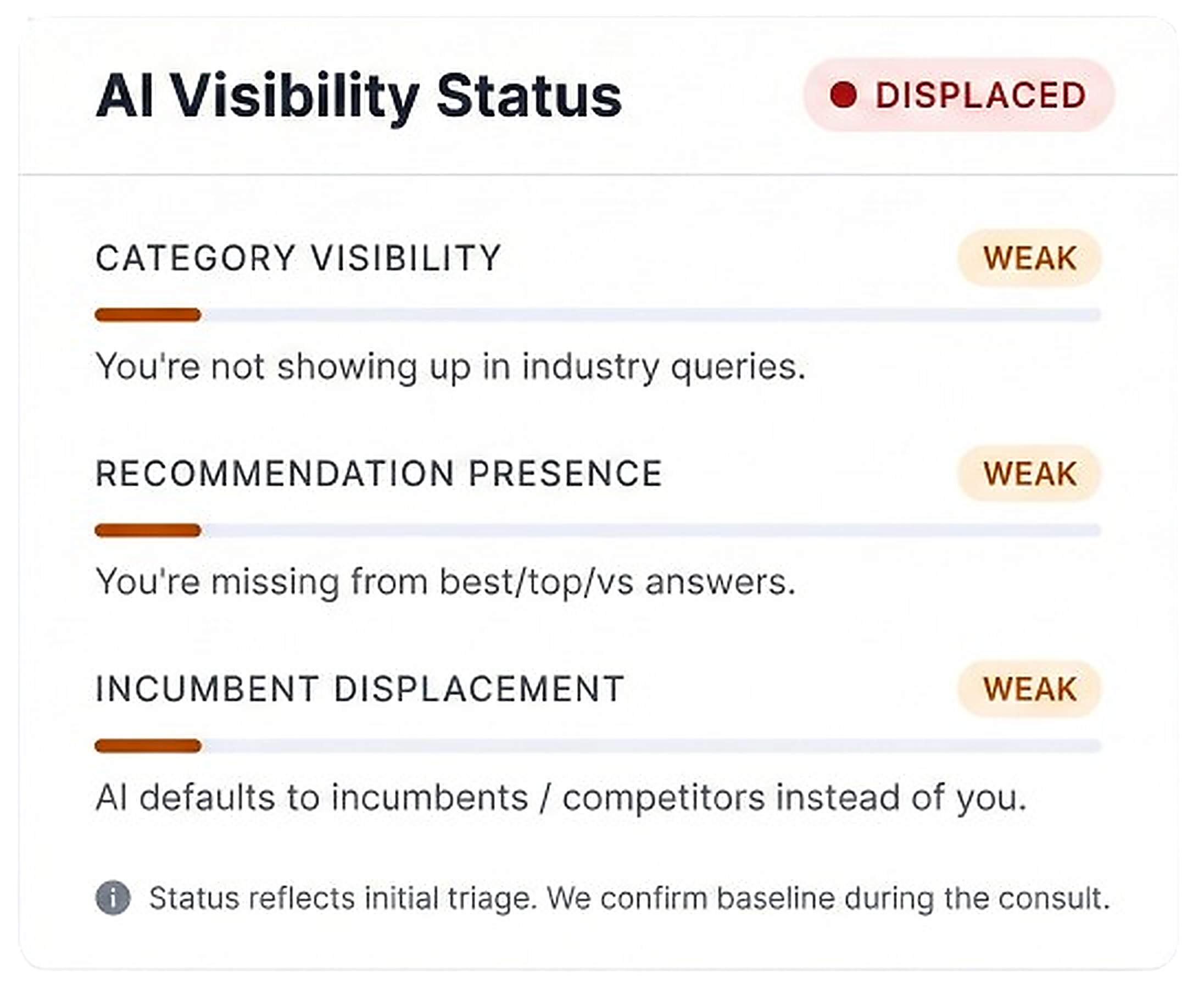
The business is absent from "best/top/vs" answers in its category.
AI summarizes the business as generic rather than differentiated.
Category visibility stays flat even when direct brand demand increases.
AI names competitor strengths but cannot articulate the company's differentiators.
AI citations drive no traffic, or traffic lands on the wrong pages.
Three ways businesses get left out of AI answers
AI visibility failures typically cluster into three patterns. Each represents a different retrieval gap with distinct causes and fixes. Growth Marshal addresses all three.

Invisible in Category Answers
The company does not appear when buyers ask AI for category-level recommendations. This happens when AI systems cannot retrieve clear category definitions, service descriptions, or proof of category participation from the company's web presence.
Analyze this mode ↓
Missing from the “Best / Top” Lists
The company is excluded from ranked recommendation lists even when it qualifies. This occurs when content lacks the comparison structures, proof blocks, and authority signals AI systems use to justify ranking decisions.
Analyze this mode ↓
AI Defaults to Market Incumbents
AI names established competitors, even for queries where the company is a strong fit. This pattern emerges when incumbents have stronger entity signals, deeper content footprints, and more third-party corroboration.
Analyze this mode ↓
The commercial impact of AI invisibility
Lost Pipeline
High-intent buyers never reach the company's website because AI systems build the consideration set before traditional search begins. Companies excluded from AI answers lose access to prospects at the earliest and most influential stage of the buying journey.
Pricing Pressure
Companies excluded from initial AI recommendations enter sales conversations late, after the competitive shortlist is already set. Late entry shifts negotiations from value to price, compressing margins and lengthening sales cycles.
Brand Drift
AI systems shape how the market understands a company. When AI misrepresents or omits a company's positioning, differentiation, or capabilities, that flawed narrative propagates to every prospect who relies on AI for research. The pipeline inherits the distortion.
When AI systems exclude a company from recommendations, citations, and mentions, the commercial impact compounds across three areas: pipeline, pricing power, and brand perception.
What strong AI visibility looks like
When AI visibility is working, a company consistently appears, gets described accurately, and earns citations to the right pages. These are the markers Growth Marshal optimizes for.
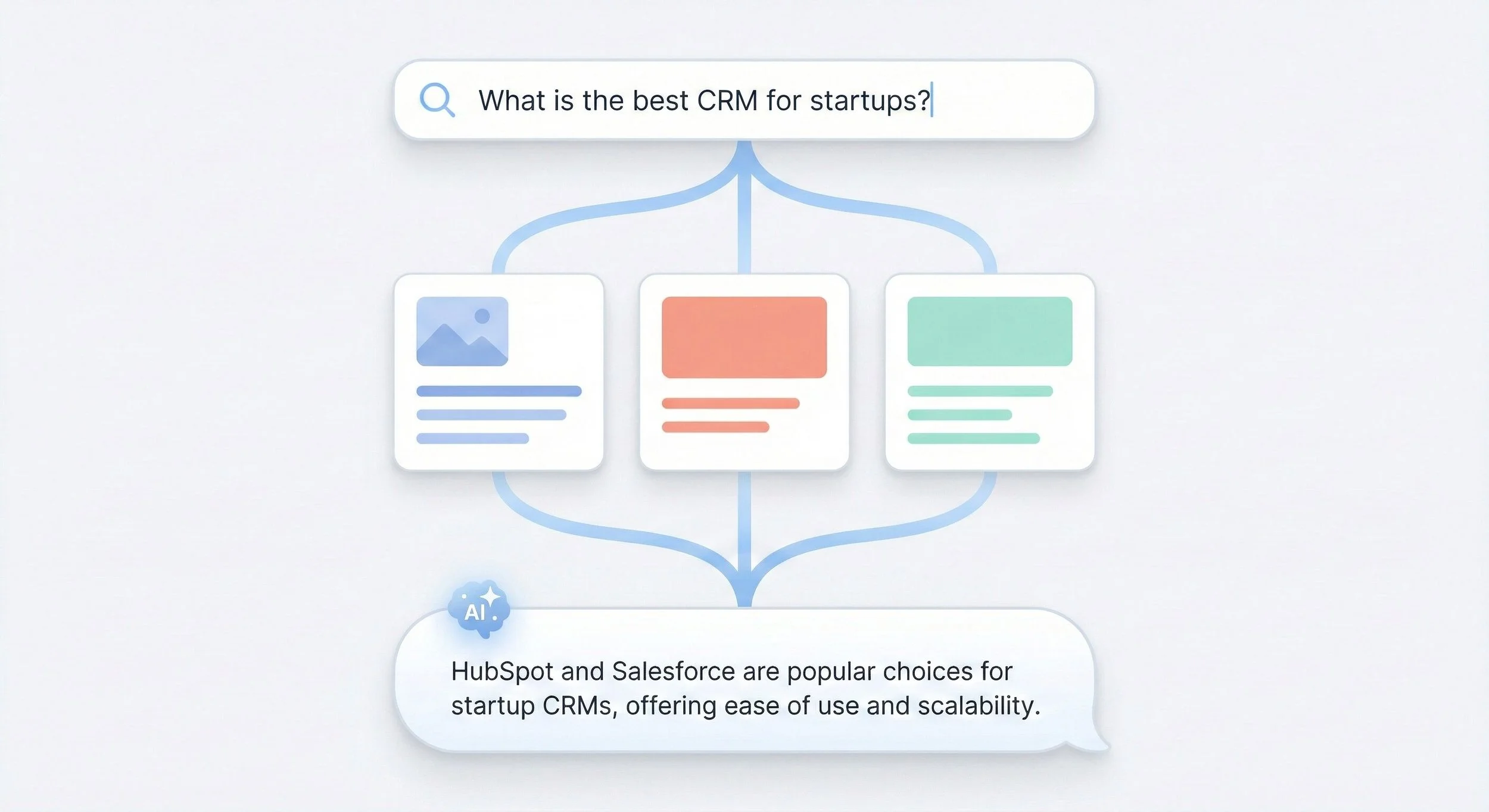
Consistent Category Inclusion
The company appears in AI-generated answers when buyers ask for recommendations in its category, not sporadically but reliably across platforms and prompt variations.
Position in "Best/Top/Vs" Queries
The company holds placement in ranked lists and comparison prompts where buyers build shortlists.
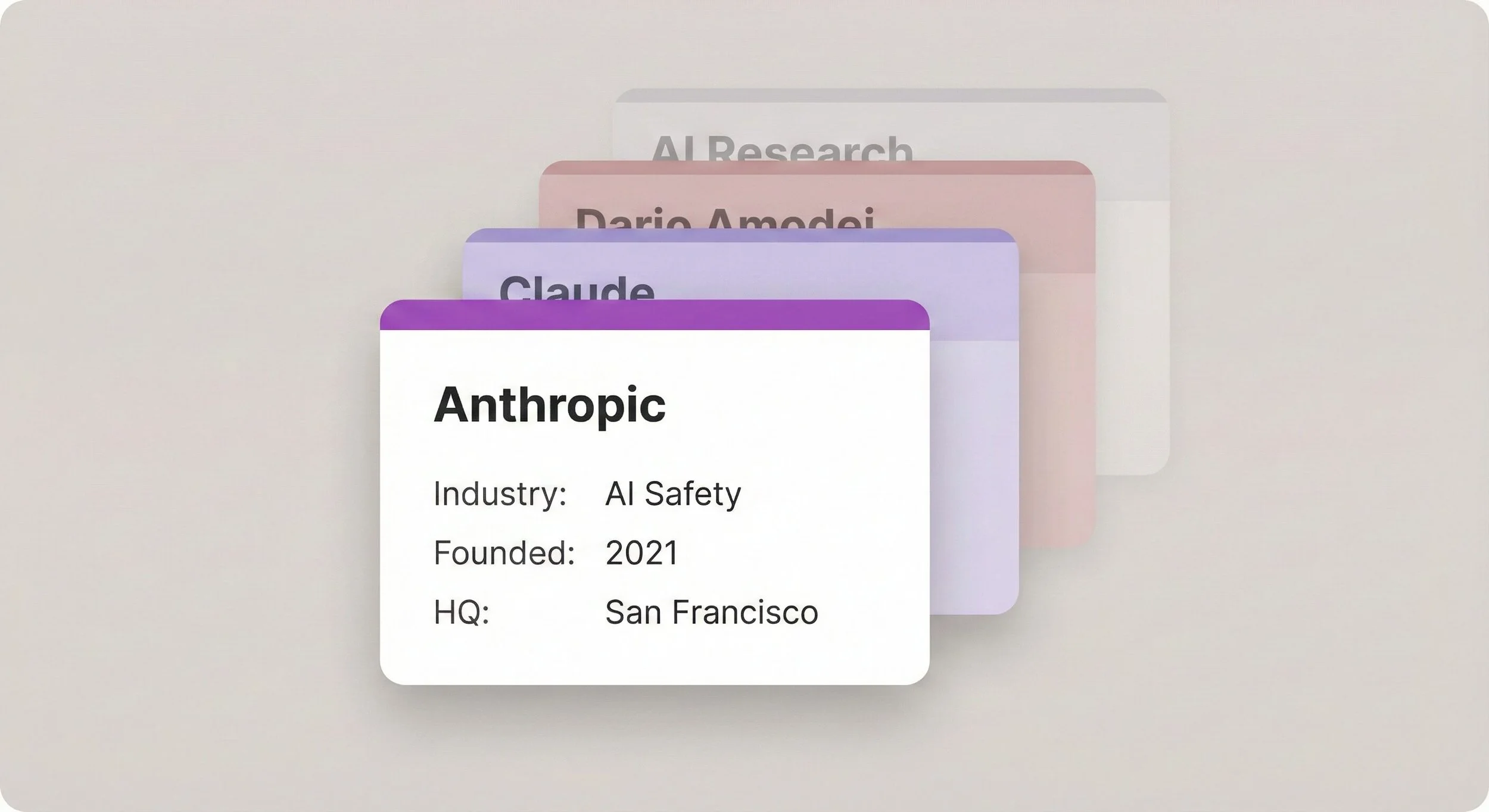
Accurate Differentiation
AI systems describe the company using its actual positioning and strengths, not generic category language or competitor attributes.
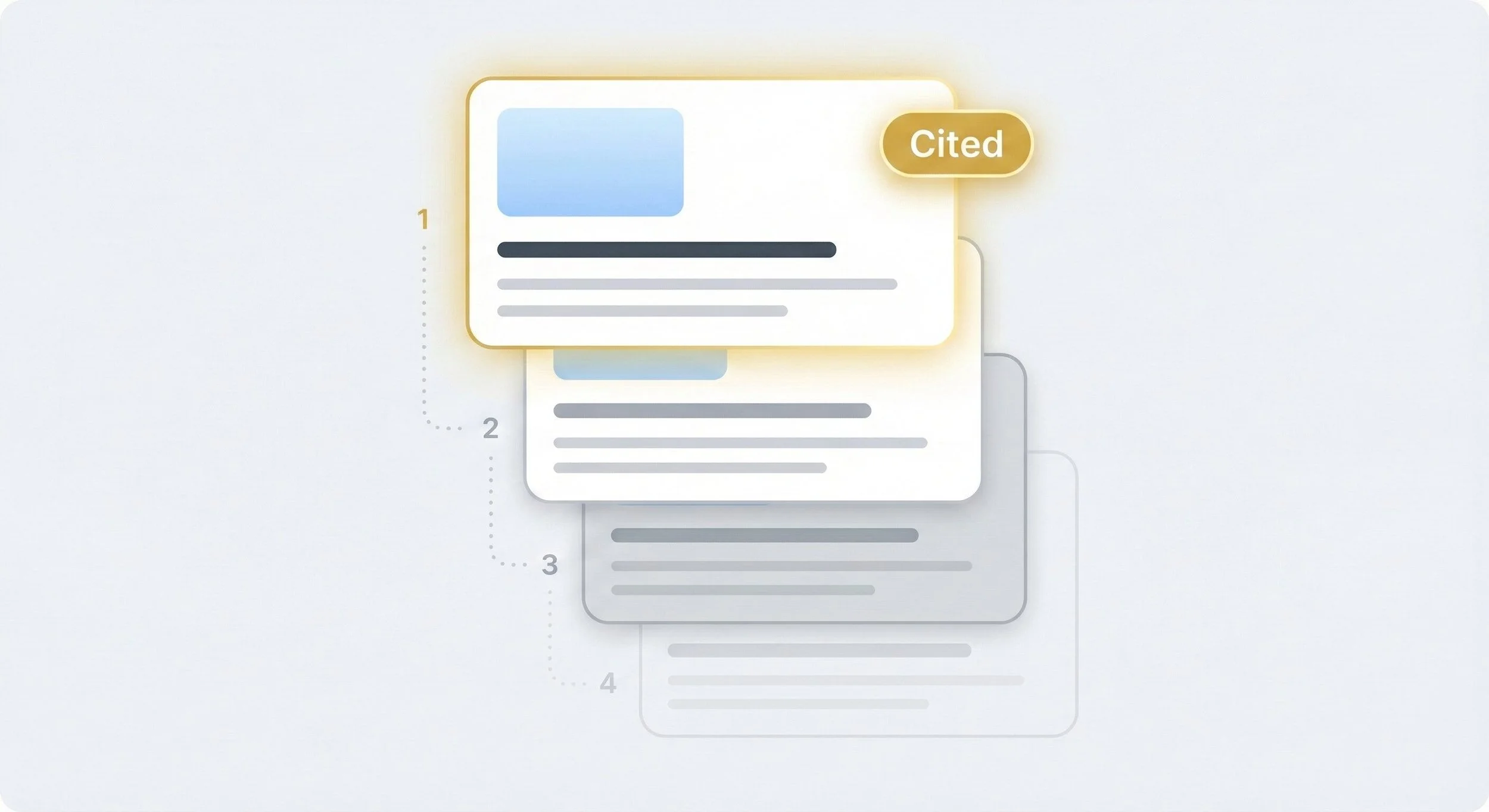
Citations to High-Converting Pages
When AI cites the company, links point to pages that drive action (service pages, pricing, contact) not outdated content.
Our System That Gets This Fixed
1
2
3
Baseline Diagnostics
WHAT WE DO
We run 100+ real buyer prompts across GPT-4, Claude, and Gemini to measure where you appear, who beats you, and what gets cited.
WHAT IT CHANGES
It replaces ‘guessing’ with data that shows exactly which prompt clusters you’re losing and why
Entity Optimization
WHAT WE DO
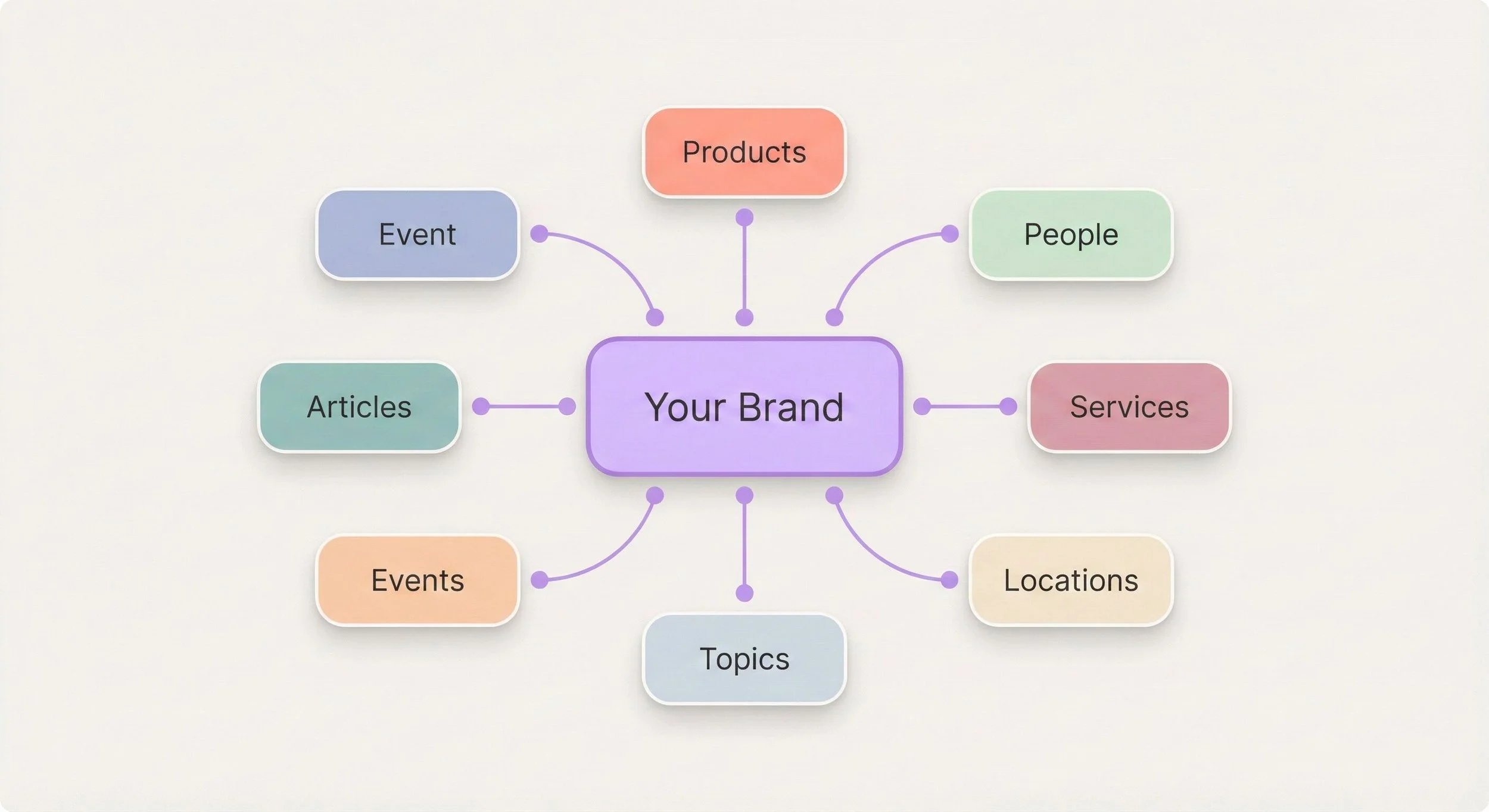
We extract core definitions, integrate them with authoritative knowledge graphs, and deploy schema markup so models can easily identify and describe you.
WHAT IT CHANGES
It stabilizes how AI “thinks” about your company and category, making you a safer pick for answer inclusion.
Answer-Layer Saturation
WHAT WE DO
We deploy highly specific content assets (FAQs, comparisons, proof blocks, citation-ready pages) purposefully designed or AI retrieval (not just human consumption).
WHAT IT CHANGES
It increases inclusion in strategic prompt clusters (‘best’, ‘top’, ‘vs’) where buyers discover and select vendors.